The software should belong in the restaurant's real rhythm.
RestaKit is designed for the actual moments that make service work: a waiter in motion, a guest at the table, the pass during a rush, a bar handover, and the management decisions in between.
Twelve moments from a working restaurant. Campaign imagery.
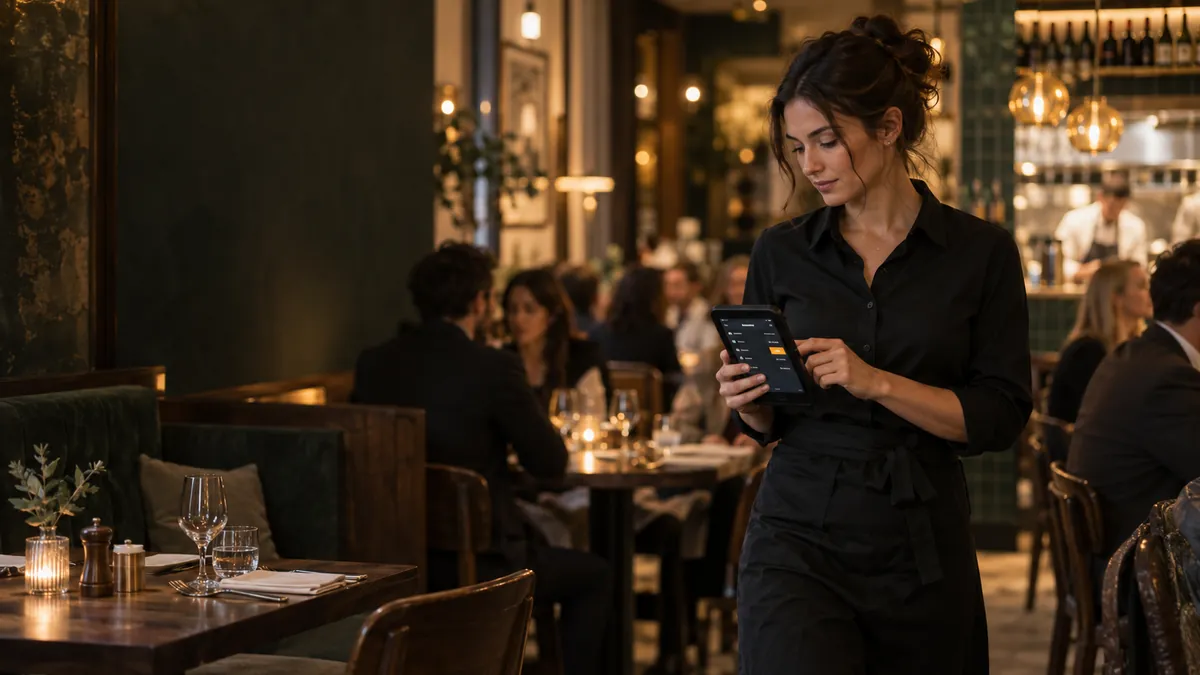
The order moves with the person serving it.
A handheld view for the moments between table, pass, and guest.
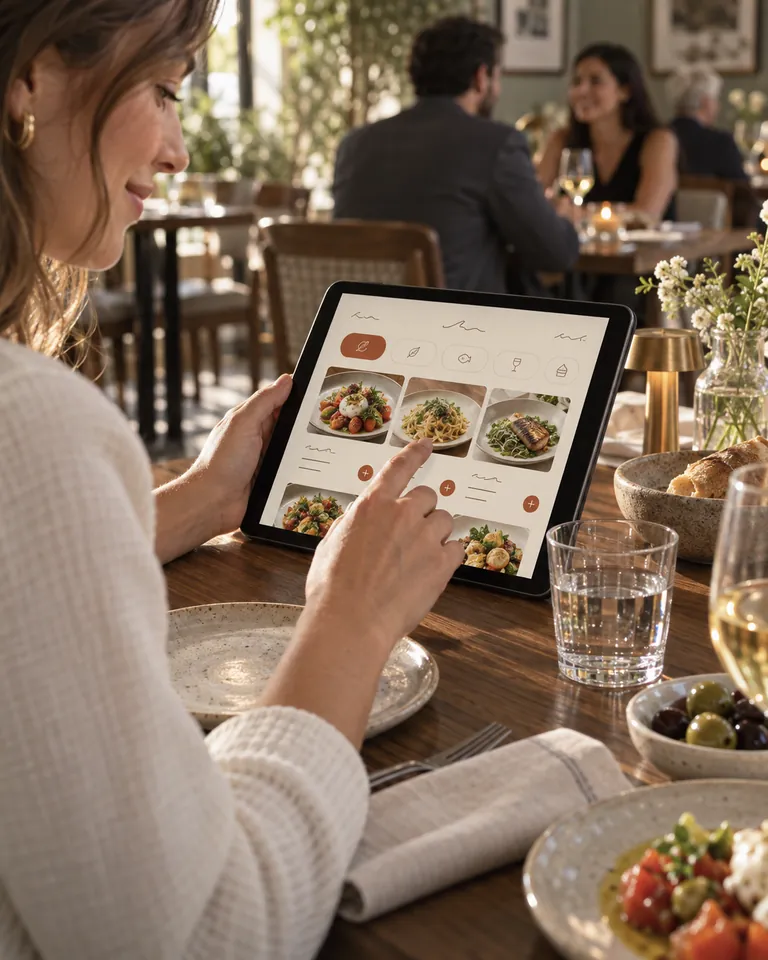
A calmer table-side menu moment.
Guests browse, choose, and customise with the information they need in front of them.
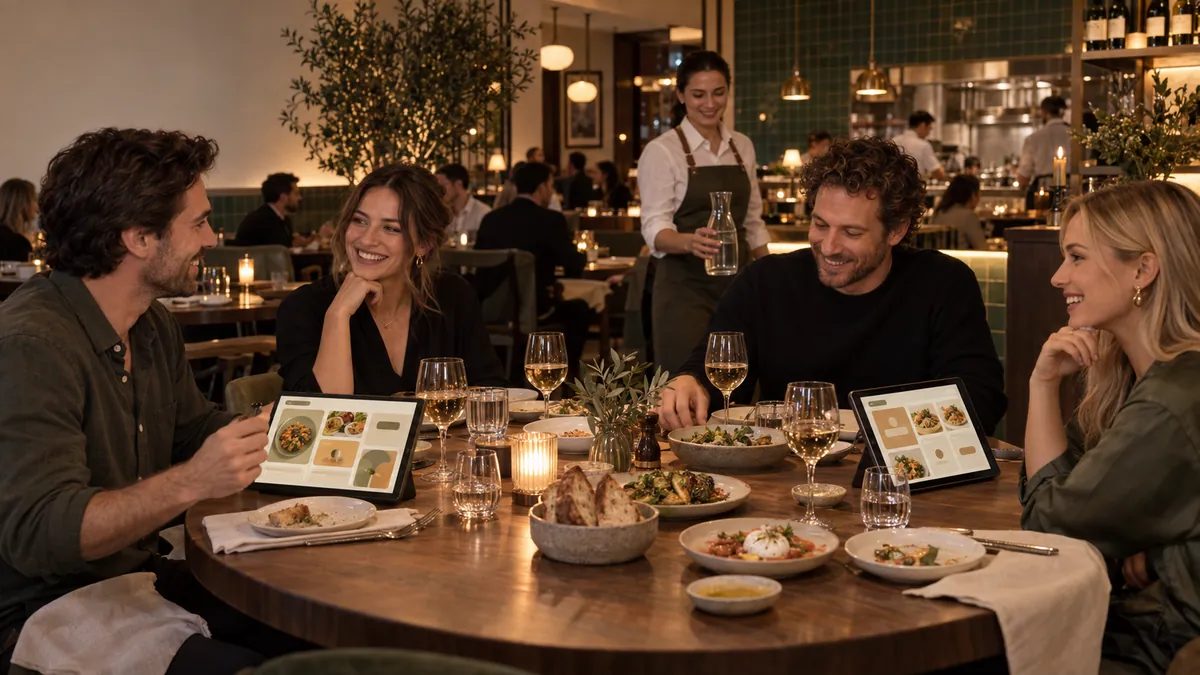
A group can still order in its own rhythm.
The screen supports the meal and conversation rather than competing with it.
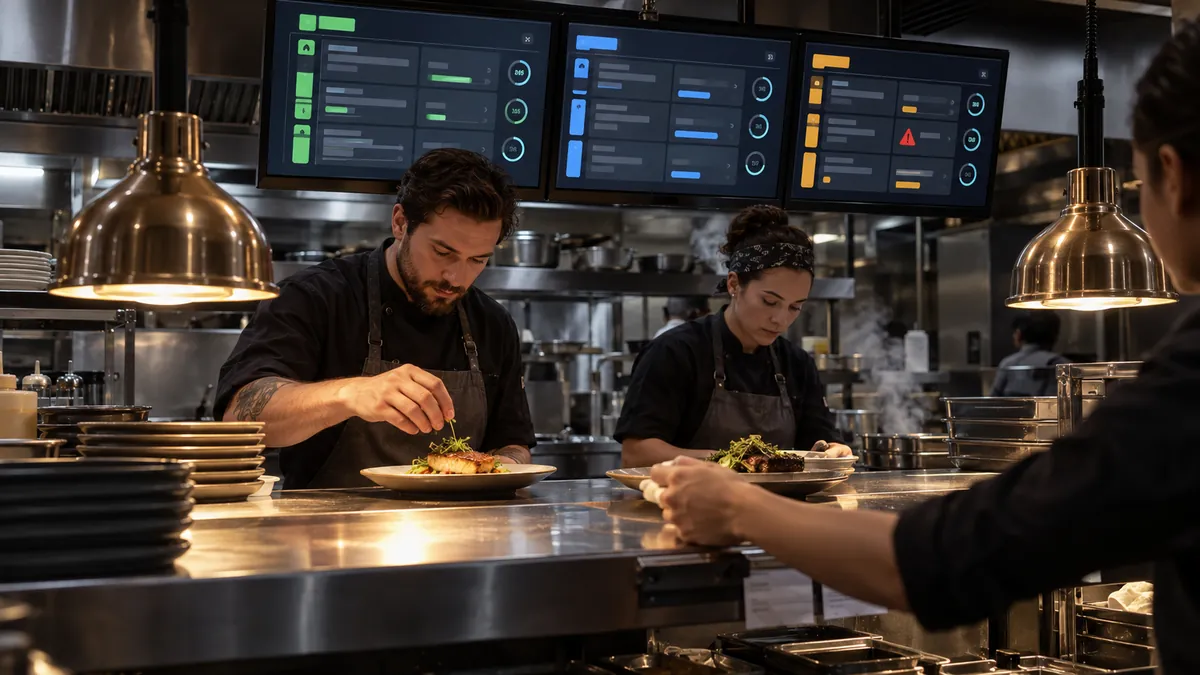
The pass sees the work moving through it.
Station status, timing, and attention points stay visible when service accelerates.
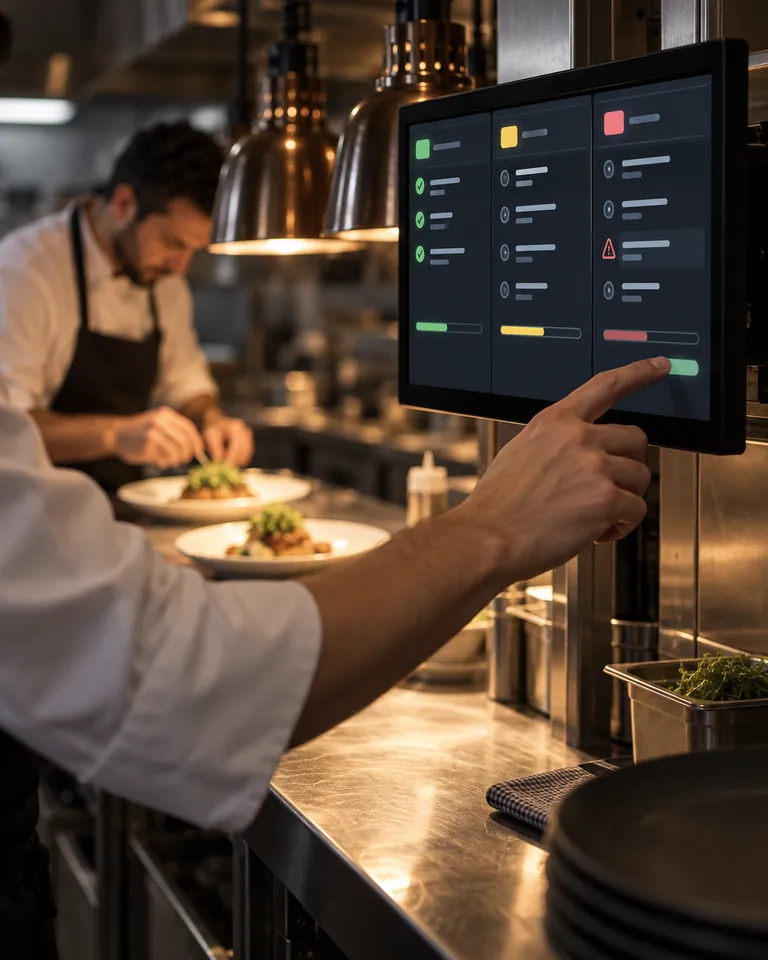
One clear ticket at the moment it matters.
A focused KDS interaction at the pass, designed for a working kitchen.
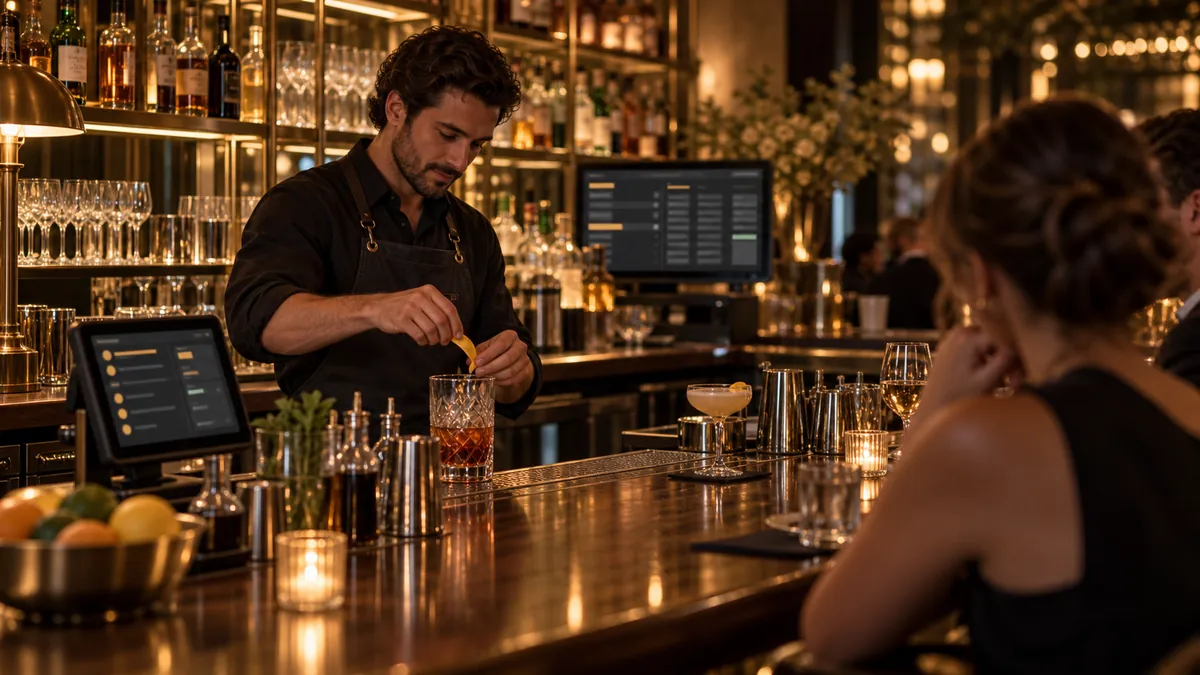
Useful screen space without losing the bar.
Compact displays support drinks, handovers, and pace while hospitality stays visible.
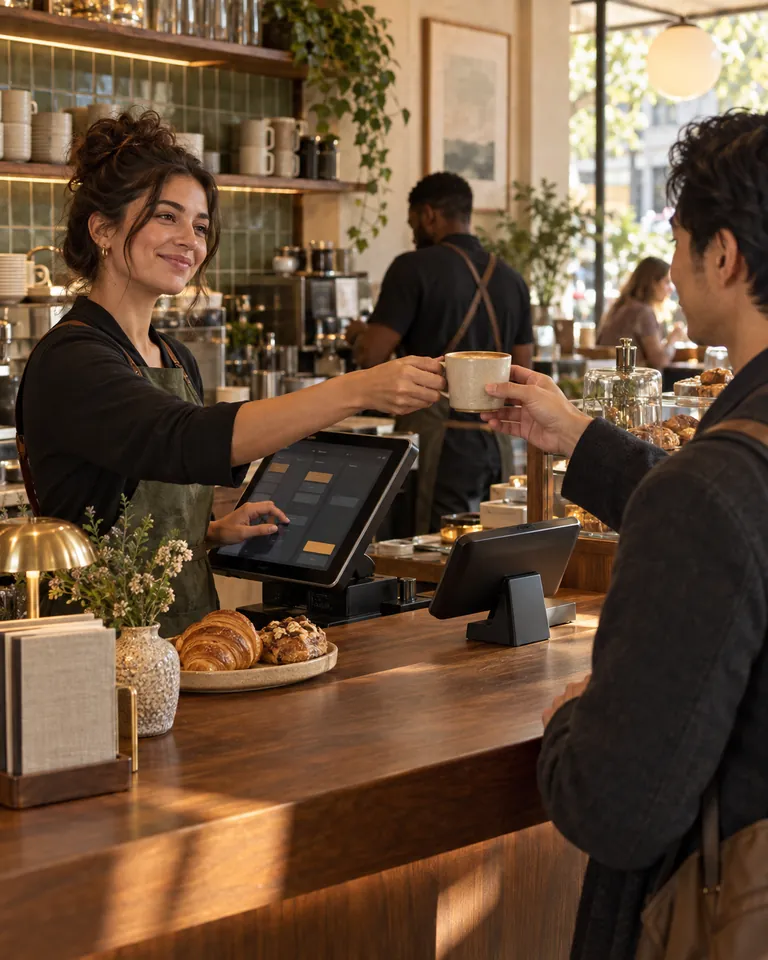
A fast handover, still a human one.
Order flow at the counter without turning the guest moment into a transaction screen.
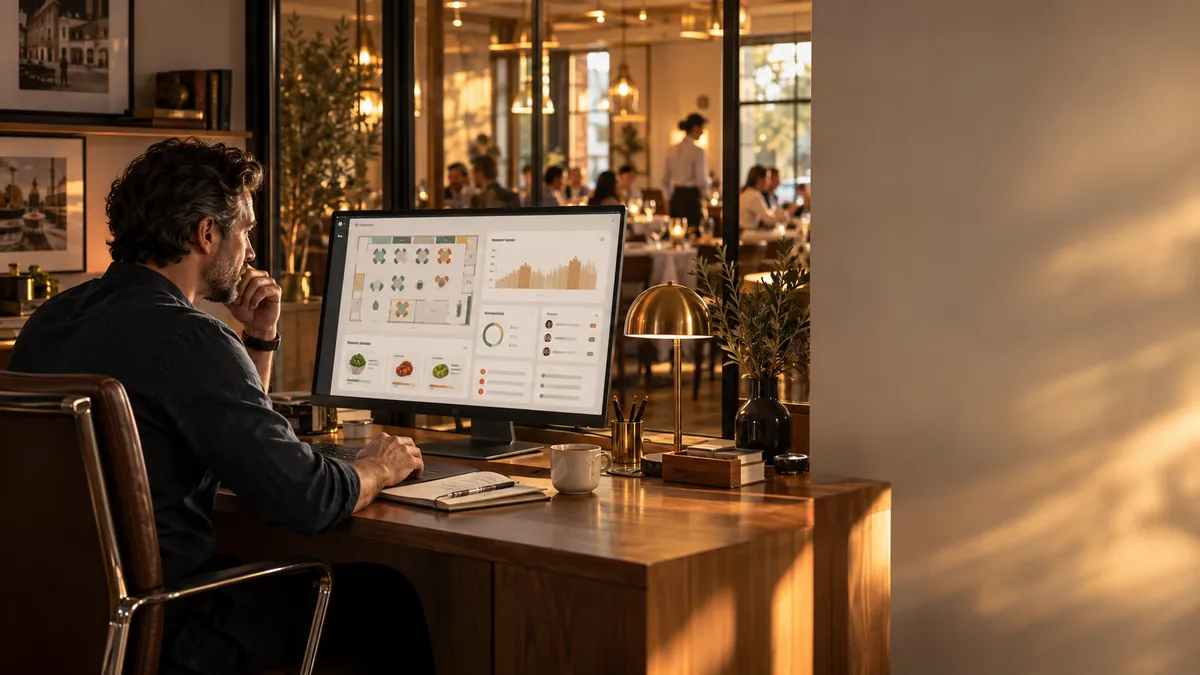
The owner can see the restaurant as one operation.
Live service, menu context, and practical signals form a clearer decision picture.
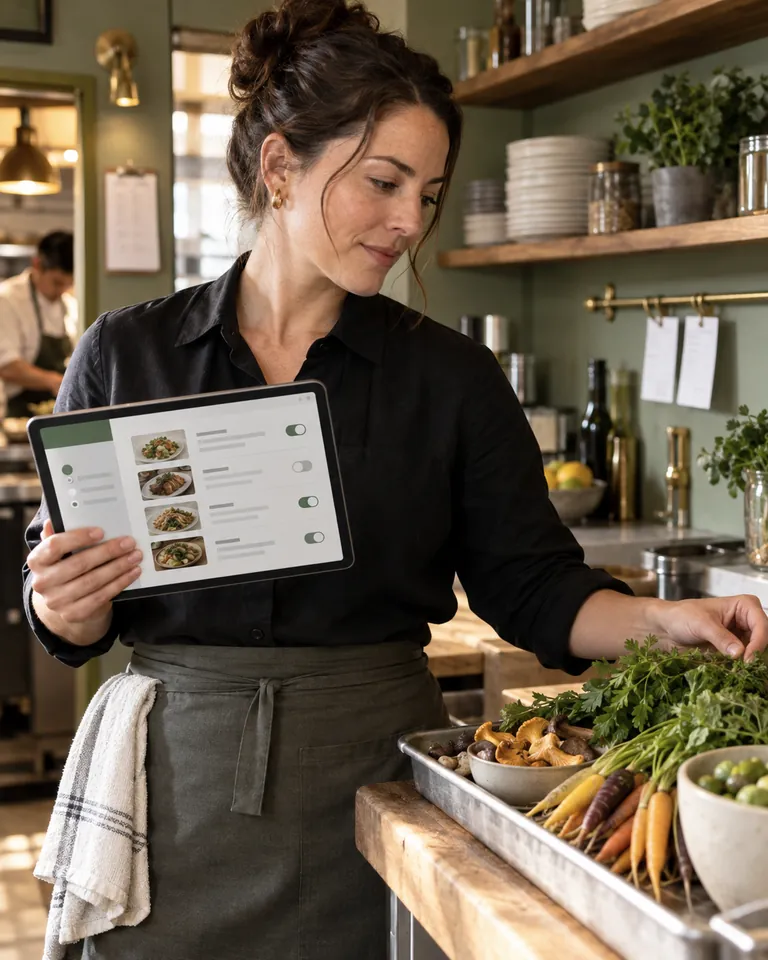
A menu change connects to the real day.
The operational screen sits close to seasonal ingredients and the current service.
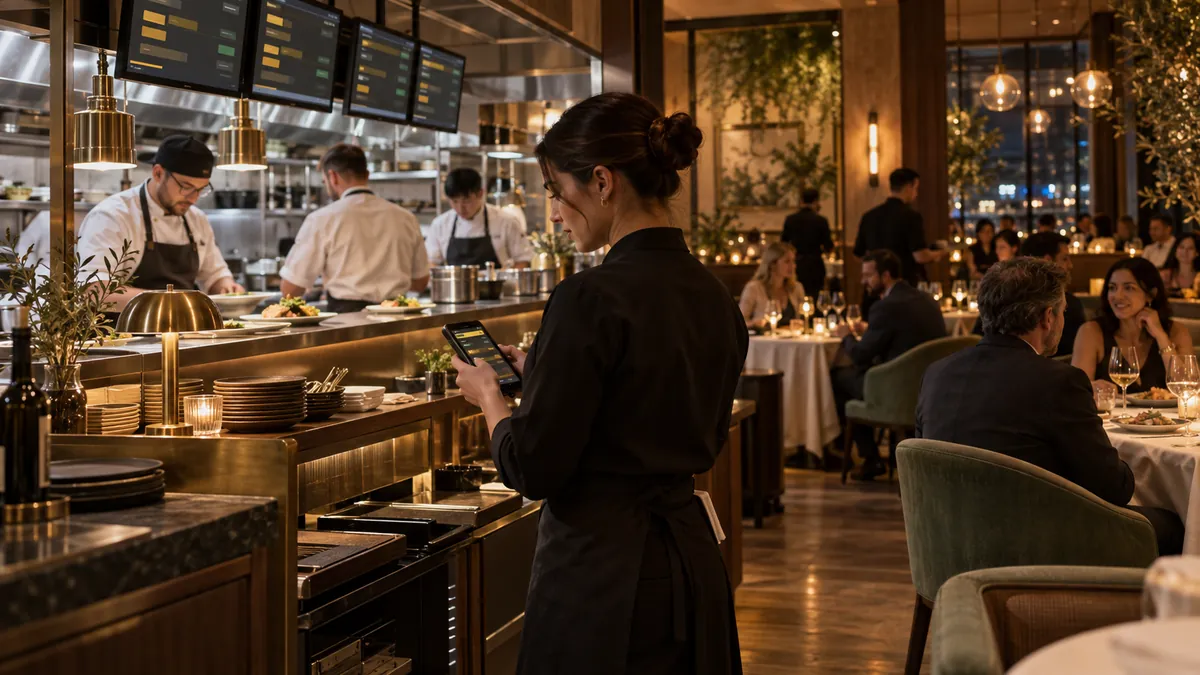
The floor and kitchen stay in the same conversation.
A wide service moment that connects guests, handheld activity, and the pass.
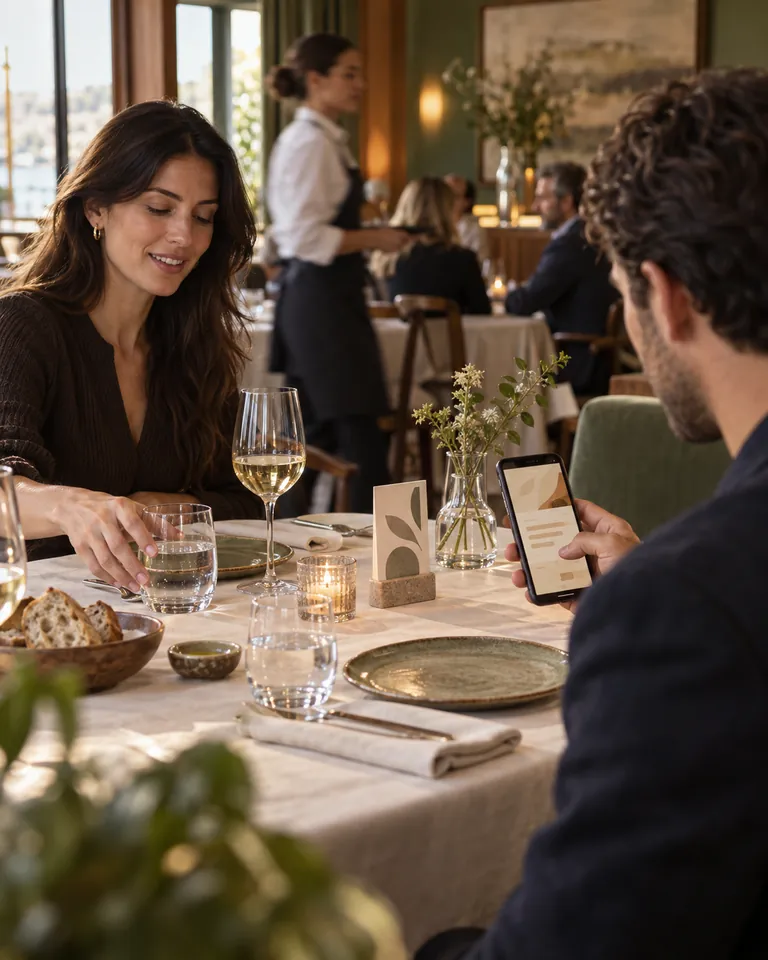
A table can welcome guests into the right journey.
A light, optional digital start that leaves the meal and the restaurant in control.
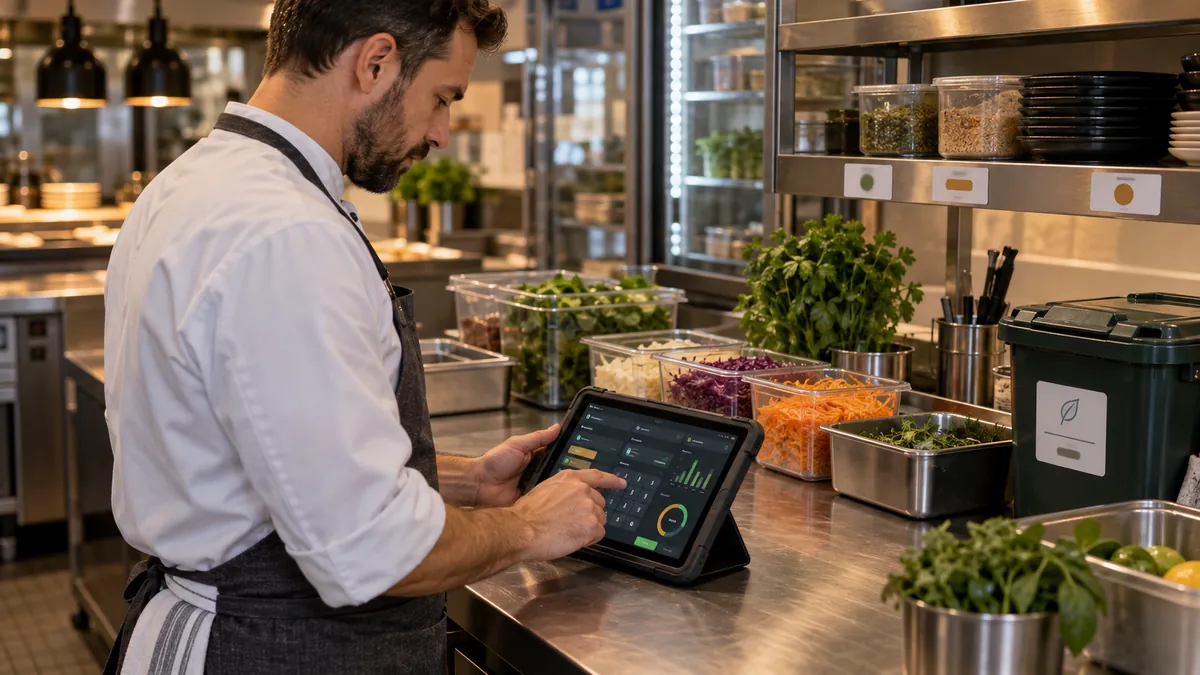
Small operational evidence can shape the next shift.
A thoughtful record of waste and stock context, made at the point it happens.